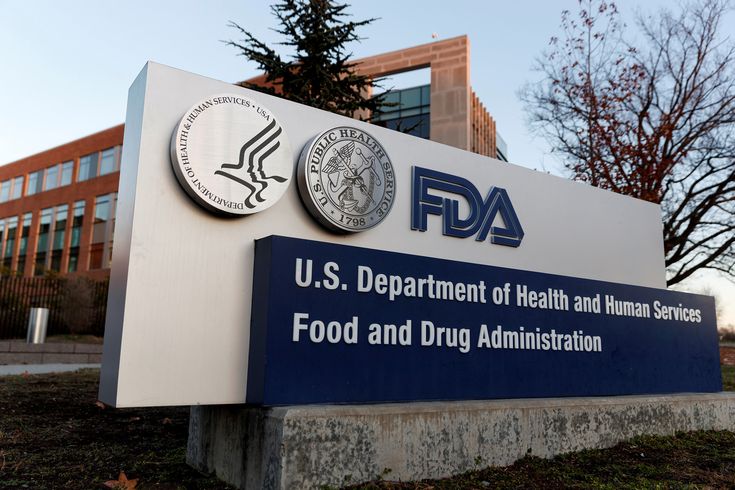
Significant legislative changes have taken place since 2022 in the United States, with the passage of two laws modernizing the FDA (Food and Drug Administration), which is responsible in particular for bringing drugs to market.
The first law (the FDA Modernization Act 2.0), enacted in December 2022, updated the legal definition of non-clinical testing to include methods other than animal testing, such as in vitro testing or computer modeling (amending the 1938 law requiring potential drugs to be tested for safety and efficacy in animals). However, this is only a possibility, nothing is made compulsory, but the law introduces more flexibility and establishes a level of equivalence between animal testing and the new methods.
Under the second bill (which had a first version with a vote in December 2024 by the House of Representatives), passed in December 2025 by the U.S. Senate(S.355 – 119th Congress (2025-2026): FDA Modernization Act 3.0 | Congress.gov), the Secretary of Health and Human Services, acting through the Commissioner of Food and Drugs, shall issue, not later than one year after the date of enactment of the bill, an interim final rule to amend the Code of Federal Regulations to :
- replace any reference to “animal” tests, data, studies, models and research with a reference to non-clinical tests, data, studies, models and research, covering both traditional tests and new non-animal methods;
- add the definition of “non-clinical test” to the article in the Federal Law on Food, Medicines and Cosmetics.
This change aims to accelerate the drug development timetable, while promoting the use of human data in safety and efficacy assessments. This law requires the FDA to accelerate the process of updating its regulations and clarifying new testing standards.
” The FDA has taken important steps to finalize the transition away from mandatory animal testing, and FDAMA 3.0 provides the agency with the legal clarity needed to get the job done,” said Tamara Drake, director of research and regulatory policy at the Center for a Humane Economy. ” Updated regulations will eliminate confusion for drug developers, help reduce unnecessary testing on primates and beagles, and ensure that modern, human-specific tools continue to advance. It is essential that this progress is accompanied by a transparent and accountable regulatory process. “
With this opportunity comes the responsibility for manufacturers to provide convincing evidence of the predictivity, sensitivity and specificity of new methods to the highest scientific standards.
Already in April 2022, the FDA had authorized the launch of a human clinical trial based on efficacy data from experiments conducted on organs-on-a-chip. This trial, promoted by Sanofi, focuses on a rare disease, autoimmune demyelinating neuropathy (CIDP: Chronic inflammatory demyelienating polyneuropathy) : more information here
In parallel with these legislative developments, several announcements indicate that the US authorities wish to accelerate the transition to non-animal research.
April 10, 2025: FDA announces plan to phase out animal testing requirements for monoclonal antibodies and other drugs
The FDA’s animal testing requirement could be replaced by a range of other approaches, including computational models of toxicity based on artificial intelligence, cell lines and toxicity tests on organoids in the laboratory. Implementation of this program begins immediately for Investigational New Drug (IND) applications, where the inclusion of data from NAMs (New Methodological Approaches) is encouraged, and is outlined in a roadmap also recently published.“This initiative marks a paradigm shift in drug evaluation and promises to accelerate meaningful treatments and cures for Americans while reducing animal use,” said FDA Commissioner Martin A. Makary.
April 10, 2025: FDA publishes roadmap to reduce animal testing in preclinical safety studies
This roadmap describes a strategic, step-by-step approach to enable the FDA to reduce animal testing in preclinical safety studies through scientifically validated New Methodological Approaches (NMAs), such as organ-on-a-chip systems, computational modeling and advanced in vitro testing. By partnering with federal agencies such as the NIH and the VA via ICCVAM, the FDA can accelerate the validation and adoption of these human-relevant methods, improving predictive accuracy while reducing animal use. This transition will improve public health by simplifying drug development and ensuring safer therapies reach patients faster, while positioning the FDA as a global leader in modern regulatory science and innovation.
To access this roadmap : click here
The NIH issued a statement in the same vein on April 29, 2025: click here
These announcements have been warmly welcomed by manufacturers of organs-on-a-chip and organoids: click here
On July 7, 2025, at an FDA and NIH workshop on reducing animal testing, an important new announcement was made: the end of funding for studies involving only animals: click here
The FDA’s proactive approach involves the ISTAND program (Innovative Science and Technology Approaches for New Drugs). The goal of ISTAND is to support the development of new approaches to drug development that could be selected for regulatory use.
On March 6, 2026, the FDA accepted an in silico drug development tool to predict drug-induced liver injury (DILI) through a letter of intent (the first step in the qualification process).
January 22, 2026: The U.S. Environmental Protection Agency (EPA) announces that the goal of reducing animal testing has been reaffirmed, with a view to phasing it out by 2035.
EPA will prioritize the development and implementation of high-quality alternatives to reduce testing on vertebrate mammals, such as rabbits, mice, rats and dogs, while maintaining regulatory compliance and rigorous reference science to EPA’s “Make America Healthy Again” agenda. EPA will collaborate with other government agencies, researchers and other stakeholders to develop and validate the use of alternative methods for toxicity testing.
As a reminder, this target had been set in 2019, then called into question a few years later, before being set again in 2026.
For example, for the first time, the EPA’s Office of Pollution and Toxin Prevention (OPPT) has used alternative scientific methods to animal testing in its carcinogenicity assessments for dibutyl phthalate and di(2-ethylhexyl) phthalate, saving around 1,600 mice and rats from laboratory experiments.
In its announcement, the EPA points out that many animal tests are not relevant to humans, and that new methodological approaches (NAMs) have the potential to be faster, less costly and more reproducible than animal tests. What’s more, for certain evaluation criteria, they make it possible to test situations that cannot be tested on animals.
January 15, 2026: The NIH establishes a new office dedicated to human-based research and reducing the use of animals, ORIVA (Office of Research Innovation, Validation, and Application).
The ORIVA office will coordinate NIH-wide efforts to develop, validate, and expand New Approaches to Modeling (NAMs), including 3D models of human tissues, computational tools, and other animal-free methods that can better reflect human biology. Support will be provided through the development of new funding opportunities, research infrastructure, and training resources. The office will also serve as an interagency coordination center and a regulatory liaison.
March 18, 2026: The FDA publishes a project titled “General Considerations for the Use of New Approach Methodologies in Drug Development.” The purpose of this project’s draft guidance is to provide drug developers with a validation framework and general recommendations for the use of novel approach methodologies (NAMs) in drug development, in order to bring safe and effective drugs to market more quickly based on human-centered data.
“Technological advances allow us to move beyond animal testing in drug development, which has a poor track record in predicting safety and efficacy in humans. These guidelines will facilitate the adoption of modern alternatives to animal testing in regulatory submissions,” said FDA Commissioner Marty Makary.
March 18, 2026: The NIH invests $150 million in research based on human biology, with the goal of reducing the use of animals.
This funding marks the first grants awarded under the “Complement Animal Research in Experimentation” (Complement-ARIE) program, an initiative aimed at developing, implementing, and standardizing laboratory or computational methods, known as new approach methodologies (NAMs). Research teams across the United States will lead projects aimed at developing models that are more predictive of human diseases.
This program will support the creation of technology centers to facilitate the development of NAMs in areas where scientific and regulatory needs are greatest. A NAM Data and Coordination Center (NDHCC) will facilitate data sharing and the development of standards.